
Tuesday, September 20, 2011


Thursday, September 15, 2011

Thursday, September 8, 2011
tulsa, oklahoma. yep.
back to school, back to school
I'm attending tulsa university as a nondegree seeking student, trying to fill in the fine art gaps of my b.a.. Here I have three classes- tile making, silkscreen, and illustrator. basically, a dream come true. when I went for my undergrad, my computer lab classes felt like they were noneducational and honestly boring. I didn't learn much. though this lab class is at times boring, i never feel like it's useless. today, I implemented what we were doing in class into something I personally enjoy. my work in progress is below.

i know these skills will come in handy with silkscreening as well as my own personal work.
also, today in silkscreening, we went to the philbrook museum and viewed the rauschenberg at gemini exhibit. I encourage anyone in the area to check it out and be sure to sit outside of the exhibit and view the video about his life. it was very interesting to see how his work progressed and how the public responded to it. in the end, he was just another deadbeat artist that just enjoyed making art his way and hoped it would sell. obviously relatable.

it's nice to be a student again and this time on a real campus. yes, tulsa isnt chicago, not even denver, but it still has resources and creative people. i'm excited to see what happens this semester.
hello tulsa, let's kick some ass.
I'm attending tulsa university as a nondegree seeking student, trying to fill in the fine art gaps of my b.a.. Here I have three classes- tile making, silkscreen, and illustrator. basically, a dream come true. when I went for my undergrad, my computer lab classes felt like they were noneducational and honestly boring. I didn't learn much. though this lab class is at times boring, i never feel like it's useless. today, I implemented what we were doing in class into something I personally enjoy. my work in progress is below.

i know these skills will come in handy with silkscreening as well as my own personal work.
also, today in silkscreening, we went to the philbrook museum and viewed the rauschenberg at gemini exhibit. I encourage anyone in the area to check it out and be sure to sit outside of the exhibit and view the video about his life. it was very interesting to see how his work progressed and how the public responded to it. in the end, he was just another deadbeat artist that just enjoyed making art his way and hoped it would sell. obviously relatable.

it's nice to be a student again and this time on a real campus. yes, tulsa isnt chicago, not even denver, but it still has resources and creative people. i'm excited to see what happens this semester.
hello tulsa, let's kick some ass.
Friday, August 19, 2011
photo diary.
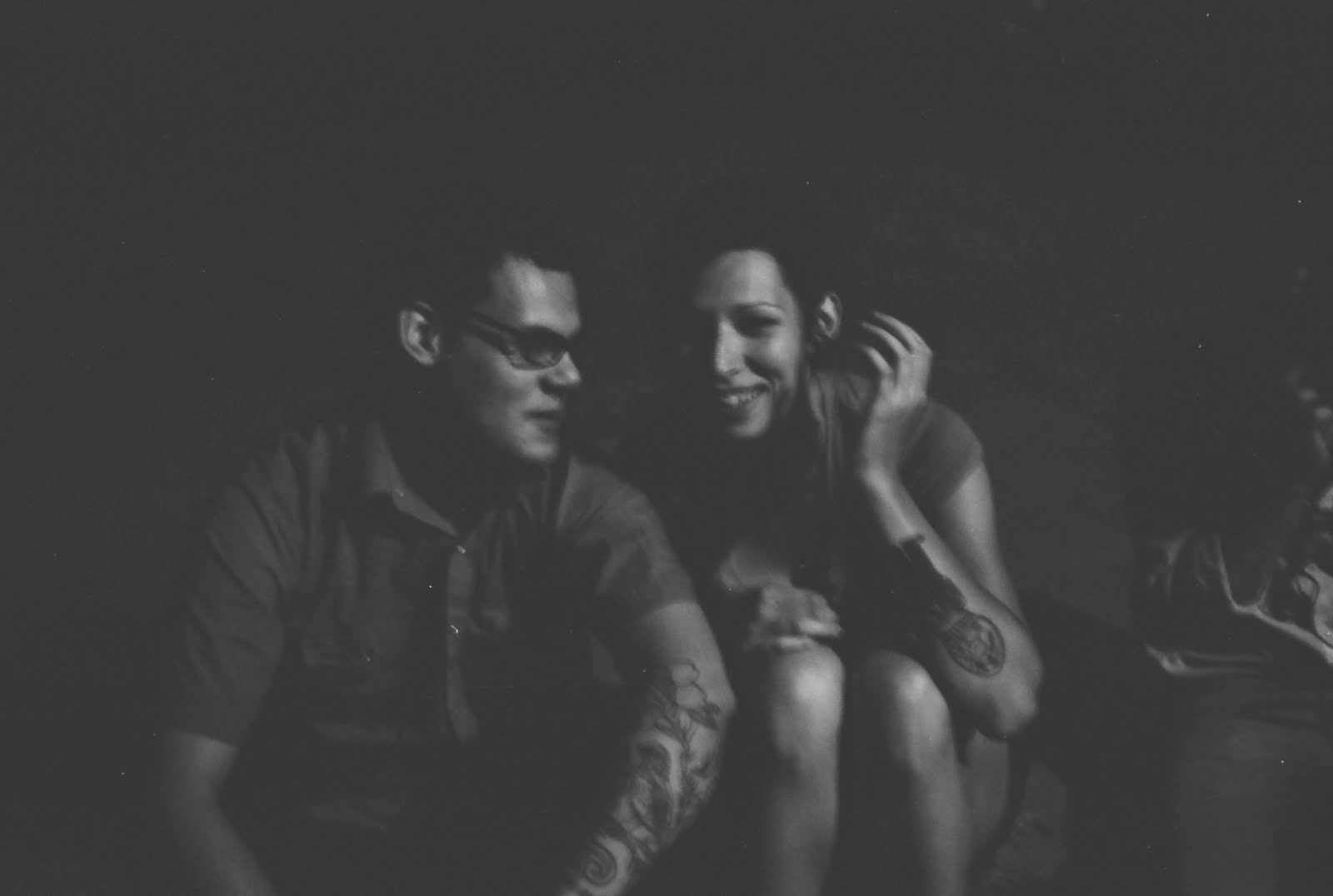
I've noticed while looking over my negatives and my facebook uploads, my photography has turned into more of a social photo diary.





Friday, July 1, 2011
ralph eugene meatyard+++++
///the art institute of chicago is exhibiting RALPH EUGENE MEATYARD july 2- sept 25///


over the years I have become obsessed with photo history and MEATYARD has definitely left an impression on me. I encourage anyone in the chicago metro area to stop by this amazing show and take a look for yourself.
here's what the art institute had to say about the show:
"Ralph Eugene Meatyard (1925-1972) has been on the fringes of photographic history- so much that he inserted one of his own prints into his personal copy of Beaumont Newhall's classic History of Photography, which did not include him. And yet his impact on photographic practice, belatedly recolonized, has been significant. An optician in Lexington, Kentucky, Meatyard sustained a life-long interest in visual perception. Well read and deeply connected to a circle of poets and philosophers, he made photographs rich in literary allusion. Meatyard's photography was not accidental or documentary, but rather deliberate, often staged, and searching for inner truths rather than ephemeral surfaces.
In his last decade, Meatyard kept returning to the tropes of dolls and masks, often photographing his children posed in abandoned houses and landscapes. These pictures put an uncanny spin on family photographs, exploring the contrasts between youth and age, childhood and mortality, intimacy and unknowability, sharing and hiding. For Meatyard, dolls represented a physical human presence, whether employed in a scene alongside people or instead of people. He used masks to universalize his sitters rather than make portraits of individuals. Masks reflect the faces we all put on for the camera; indeed, Meatyard's last project before his untimely death was The Family Album of Lucybelle Crater, a project based on the common snapshot album but featuring friends and family all wearing masks. Drawn from the photographer's estate, this focused exhibition- all works made before that iconic project- examines dolls and masks across different bodies of work as a window onto this enigmatic photographer's larger practice."
Admission:
Adults: $18
Children, Students, and Seniors (65 and up): $12
Children under 14 are free. Members are always free.
Museum Hours
Monday–Wednesday, 10:30–5:00
Thursday, 10:30–8:00
Friday–Sunday, 10:30–5:00
do yourself a favor and go.


over the years I have become obsessed with photo history and MEATYARD has definitely left an impression on me. I encourage anyone in the chicago metro area to stop by this amazing show and take a look for yourself.
here's what the art institute had to say about the show:
"Ralph Eugene Meatyard (1925-1972) has been on the fringes of photographic history- so much that he inserted one of his own prints into his personal copy of Beaumont Newhall's classic History of Photography, which did not include him. And yet his impact on photographic practice, belatedly recolonized, has been significant. An optician in Lexington, Kentucky, Meatyard sustained a life-long interest in visual perception. Well read and deeply connected to a circle of poets and philosophers, he made photographs rich in literary allusion. Meatyard's photography was not accidental or documentary, but rather deliberate, often staged, and searching for inner truths rather than ephemeral surfaces.
In his last decade, Meatyard kept returning to the tropes of dolls and masks, often photographing his children posed in abandoned houses and landscapes. These pictures put an uncanny spin on family photographs, exploring the contrasts between youth and age, childhood and mortality, intimacy and unknowability, sharing and hiding. For Meatyard, dolls represented a physical human presence, whether employed in a scene alongside people or instead of people. He used masks to universalize his sitters rather than make portraits of individuals. Masks reflect the faces we all put on for the camera; indeed, Meatyard's last project before his untimely death was The Family Album of Lucybelle Crater, a project based on the common snapshot album but featuring friends and family all wearing masks. Drawn from the photographer's estate, this focused exhibition- all works made before that iconic project- examines dolls and masks across different bodies of work as a window onto this enigmatic photographer's larger practice."
Admission:
Adults: $18
Children, Students, and Seniors (65 and up): $12
Children under 14 are free. Members are always free.
Museum Hours
Monday–Wednesday, 10:30–5:00
Thursday, 10:30–8:00
Friday–Sunday, 10:30–5:00
do yourself a favor and go.
Saturday, April 30, 2011
update
WEBSITE UPDATE/////
finally, I did a much needed website update. I added a little, changed a little, and took a little out. there's a new set of galleries and some images have been added to old ones. more will be added once I scan more work. hope you guys like it, give feedback.

finally, I did a much needed website update. I added a little, changed a little, and took a little out. there's a new set of galleries and some images have been added to old ones. more will be added once I scan more work. hope you guys like it, give feedback.

Lorna Simpson

April 2, 2011
"Renowned for photographs, videos and text-works that challenge narrow, conventional views of gender, identity, culture, history, and memory, Lorna Simpson discusses her process and her most recent work, placing it in context within the larger span of her practice. Over the last five years, Simpson has been creating works that draw from an archive of photographs from the 1950s, complicating the historical images by creating her own replicas of these, posing herself to mimic the originals. The MCA Chicago organized Lorna Simpson's first traveling museum exhibition in 1992, and most recently featured early works by the artists in the exhibition Rewind 1970s to 1990s: Works from the MCA Collection. Her work is included in the upcoming 2012 MCA exhibition This Will Have Been: Art, Love, and Politics in the 1980s. " -mca chicago site.
I was lucky enough to catch Lorna's talk here in chicago. She spoke a lot about her transition of work as well as her side obsessions.
While in Seattle attending Pilchuck Glass School, she came across the work of James Van Der Zee and noticed the details in the picture- the vases in particular. In class she would recreate the vases and then photographed them.

9 Props, 1995, Waterless lithographs on 9 felt panels, 47 1/2 x 35 1/2 inches overall.
JAMES VAN DER ZEE//
With each image of the vase, Simpson would describe the Van Der Zee image in text below. This is how the image is present.

The text reads:
Woman with a goldfish bowl., 1923, James Van Der Zee
A woman wearing pearls stands behind a bouquet of flowers and goldfish bowl.
Her right hand rests on the rim of the bowl, as she gazes at a painted image of a butterfly in flight.

Wigs II, 1996-2006, Waterless lithographs on felt.
HAIR ABSTRACTIONS//
What most people have seen of Simpson's work are pieces from her felt series. In the talk, she commented on how the wigs are 'surrogates' or unoccupied hair. They were a topic of gender, society of masculinity and femininity. Her point was to raise the idea of how malleable gender and appearance can be.

Easy to Remember, 2001, Video installation, 16mm black-and-white film transferred to DVD.
2 minutes, 35 seconds, sound.
EASY TO REMEMBER//
This video piece is one of my favorite works by Lorna Simpson. While in school, I had only seen still shots or clips from the video but during her talk, we were able to watch it in her entirety. The mouths are all humming the same tune, John Cold Train. but with each person, the characteristics of the song change. Naturally, some take different keys and attitudes. They were filmed at different times, listening to the song through headphones, simply reacting and yet flow so well together. I love watching how anyone brings something different to the table because of who they are which is why i'm fascinated by this piece and what it says about people by comparing them in this style.

Cloudscape, 2004, Single-projectioin video installation.
Video transferred to DVD, 3 minutes, sound.
Performance by Terry Adkins.
CLOUDSCAPE//
Terry Atkins stands in a room wearing a suit and whisling a tune. As he continues, smoke begins to fill the room. By the end of the song, you lose visual of Atkins and when he finishes, the video goes in reverse. The smoke then creeps back to where it once came from and his whistle, now played backwards, turns into a different song with a different mood.

Corridor, 2003. Double-projection video installation, video transferred to DVD.
13 minutes, 45 seconds, sound.
CORRIDOR//
The final work that she discussed during the talk was 'Corridor', a video piece that contrasts the basic daily life of an african american worman in 1860 to 1960. The woman is played by Wangechi Mutu, whose work I suggest you take a look at.

Head B, 2008, ink on paper, 11 x 8.5 inches. (left)
Head G, 2008, ink on paper, 11 x 8.5 inches. (right)
HEAD DRAWINGS//
I have never been able to master the art of watercolors and inkwash drawings but I admire it extremely. This collection of work is something she did that follows the her interested in hair and it's purpose and possibilities. I love these so much and even though she says they she can't draw, I can't stop looking at them.
///////////////////////////////////
If you haven't checked out her work, do it. she's talented, amazing, and such a lovely person. I was so nervous to talk to her but somehow I got the courage to ask her a question during the talk and mumbled like an idiot. I stayed after, thanked her and spoke to her for a moment. Lorna Simpson can now be added to the list of amazing photographers I have met before dying, joining joel peter-witkin and arno rafael minkkinen-- so amazing.
-c
Subscribe to:
Posts (Atom)
